ROAS Calculator
See how many dollars each advertising dollar returns. Enter revenue from ads and your ad spend to run the ROAS calculation instantly, with the formula explained and 2026 reference points so you know whether your return on ad spend is healthy.
Calculate your ROAS
How to calculate ROAS
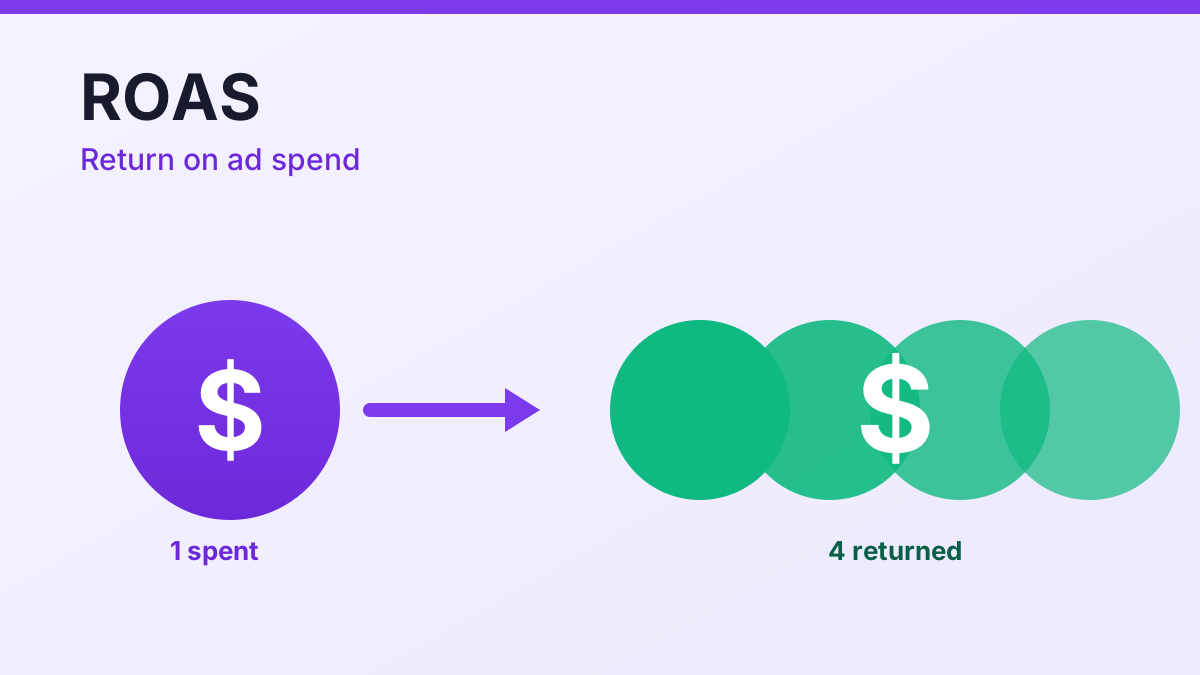
To learn how to calculate ROAS, divide the revenue a campaign produced by the amount you spent on it. If a campaign drove $20,000 in revenue from $5,000 in spend, the ROAS calculation is $20,000 ÷ $5,000 = 4, usually written as 4:1 or 400%.
That single ratio tells you whether advertising is paying for itself across search, social, display, or email — as long as you attribute revenue and spend to the same campaign and window. This tool runs the division and also converts the result to a percentage and a per-dollar return so you can read it three ways at once.
Break-even ROAS by profit margin
A “good” ROAS is really anything above your break-even point, and break-even depends entirely on your gross margin. The math is simple: break-even ROAS equals 1 divided by your margin. Enter your margin above and this break even roas calculator shows the minimum return you must clear to avoid losing money on a sale.
| Gross profit margin | Break-even ROAS |
|---|---|
| 20% | 5.0 (5:1) |
| 25% | 4.0 (4:1) |
| 33% | 3.0 (3:1) |
| 50% | 2.0 (2:1) |
| 70% | ~1.4 (1.4:1) |
High-margin digital products break even at a much lower ROAS than thin-margin retail, which is why a blanket “4:1 is good” rule misleads more often than it helps.
How to use this calculator
- Enter your ad-driven revenue. Add the total revenue your campaign generated. Keep the revenue window aligned with the spend window so your return on ad spend comes out accurate.
- Add your total ad spend. Enter what you spent on media for that same period. This is the denominator in the return on ad spend formula for any channel.
- Add margin to set a break-even target. The tool returns your ROAS as a ratio. Enter your gross margin to see the break-even ROAS you must clear to stay profitable, then compare against the 2026 reference points below.
Frequently asked questions
How do you calculate ROAS?
Divide revenue from a campaign by its ad spend. If you earned $10,000 from $2,500 in spend, your ROAS is 4:1. That is the whole ROAS calculation for any channel, and the calculator above returns it instantly along with the percentage and per-dollar return.
What is a good ROAS in 2026?
A common rule of thumb is 4:1, but the honest answer is that a good ROAS is anything above your break-even point. At a 25% gross margin you break even at 4:1; at a 50% margin you only need 2:1 to be profitable.
What is break-even ROAS?
Break-even ROAS is 1 divided by your gross profit margin — the return at which advertising neither makes nor loses money. Use the breakeven roas calculator above by entering your margin, and any ROAS above that figure is profit.
Is ROAS the same as ROI?
No. ROAS measures revenue per dollar of ad spend; ROI measures profit against total cost. ROAS is always the higher number because it ignores product and operating costs, so read it alongside your margins, not on its own.
ROAS vs ROI, CPA, and LTV
ROAS and ROI are not the same thing. ROAS compares revenue to ad spend only, while ROI compares profit to total cost, so ROAS always looks larger. A 4:1 ROAS can still be unprofitable once product cost, shipping, and overhead are included — which is why you read it next to margin, CPA, and customer lifetime value. A campaign with a modest ROAS but strong repeat-purchase LTV can easily beat a high-ROAS campaign that only wins one-time buyers.