CAC Calculator
Find out what it really costs to win one customer. Enter your total sales and marketing spend and the number of new customers it produced to get your CAC instantly, with the formula explained and 2026 LTV:CAC benchmarks for context.
Calculate your CAC
How to calculate customer acquisition cost
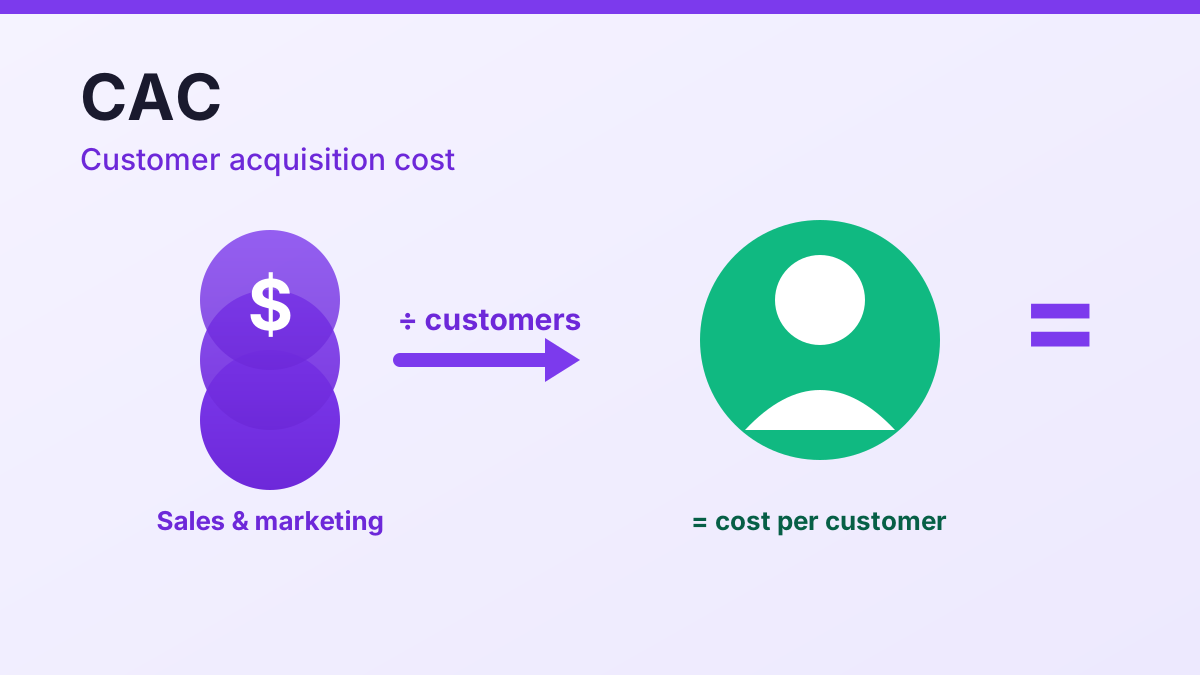
Learning how to calculate customer acquisition cost takes one division: total sales and marketing spend divided by the new customers that spend acquired. Spend $50,000 across ads, salaries, and tools to win 250 customers and your CAC is $200. That single number tells you what growth actually costs.
This customer acquisition cost calculator runs the division instantly and, when you add lifetime value, returns the LTV:CAC ratio alongside it. The CAC calculation is deliberately blended — it rolls every acquisition expense into one figure rather than isolating a channel the way cost per acquisition does.
LTV:CAC ratio benchmarks in 2026
CAC means little on its own; it earns its keep next to customer lifetime value. The LTV:CAC ratio is the standard health check investors and operators use to judge whether growth is sustainable.
| LTV:CAC ratio | What it signals |
|---|---|
| Below 1:1 | You lose money on every customer you acquire |
| 1:1 – 3:1 | Under-investing in growth or margins too thin |
| ~3:1 | Widely cited healthy target for SaaS |
| 5:1 and up | Often a sign you could safely spend more to grow |
The best SaaS businesses run ratios of 3:1 and sometimes as high as 7:1 or 8:1. A ratio well below 3:1 usually means acquisition is too expensive or lifetime value is too low.
How to use this calculator
- Add up your full sales & marketing spend. Include media budget, salaries, tools, and agency fees for the period. A complete number is what separates the CAC calculation from a single-channel cost per acquisition figure.
- Enter new customers acquired. Add the count of net-new paying customers that spend produced. This customer acquisition cost calculator divides one by the other so you do not have to.
- Compare CAC against lifetime value. Add your LTV to read the LTV:CAC ratio. Knowing how to calculate cost per acquisition matters far less than knowing whether each customer earns back more than they cost.
Frequently asked questions
How do you calculate customer acquisition cost?
Divide total sales and marketing spend by the number of new customers acquired in the same period. Spend $50,000 to win 250 customers and your CAC is $200. That is the whole CAC calculation, and the tool above runs it instantly.
What is the difference between CAC and CPA?
CPA usually measures the cost of one conversion on a single channel, so knowing how to calculate cost per acquisition answers a narrower question. CAC is the blended, fully loaded cost of a paying customer across all channels, salaries, and tools.
What is a good LTV:CAC ratio in 2026?
Around 3:1 is the widely cited healthy target — three dollars of lifetime value for every dollar of acquisition cost. The best SaaS companies reach 5:1 or higher, while below 1:1 you lose money on every customer.
What costs should I include in the CAC calculation?
Everything you spend to acquire customers: ad and media budget, sales and marketing salaries, software and tools, and any agency or contractor fees. Leaving out salaries is the most common way CAC ends up understated.
CAC vs CPA vs payback period
CAC and cost per acquisition (CPA) are close cousins but not identical. CPA usually measures the cost of a conversion on one channel, while CAC is the fully loaded, blended cost of a paying customer across every channel and headcount. Read CAC next to two things: lifetime value, so you know each customer is worth more than they cost, and the CAC payback period, so you know how many months of revenue it takes to earn that spend back. A healthy ratio with a slow payback can still strain cash flow.